



As a global tech behemoth, Amazon interview are both rigorous and comprehensive, designed to assess candidates across technical proficiency, problem-solving acumen, and cultural fit. Whether you’re eyeing a role as a software engineer or a product manager, the interview process rigorously tests your skills against Amazon’s high-bar Leadership Principles. With intense competition for each position, a deep understanding of the interview format, question types, and preparation strategies is crucial. This guide unpacks Amazon’s interview details, offering insights to help you shine and secure your dream role at this industry-leading company.

Interviewer Introduction
Interviewer:
“Hello, my name is XXX and I’ve worked at Amazon for nearly five years as an intern after college and since then have worked on various backend and frontend applications with my team. Today’s interview will consist of: for the first 15 minutes I will ask behavioral-related questions before spending the remaining 30 minutes answering coding-related queries; at this time we’ll also set aside five minutes for you to ask any additional queries regarding Amazon or related matters.”
Candidate:“OK, that sounds fine.”
Behavioral Question 1
Interviewer:
“Tell me about a time when you worked against tight deadlines and didn’t have time to consider all the options before making a decision.”
Candidate:
“In my second year as a graduate student, I had to prepare for both the GRE and TOEFL exams while managing a full course load and participating in extracurricular activities. I prioritized my tasks by focusing on the most important ones first, like studying for the exams and completing high-priority projects. For instance, I would allocate specific times for GRE and TOEFL preparation, then work on my coursework, and finally engage in extracurricular activities in the remaining time. This approach helped me manage my tight schedule effectively.”
Interviewer:
“How did you balance the different priorities, especially with such a packed schedule?”
Candidate:
“I made a comprehensive plan and followed it strictly. Concurrently studying for both TOEFL and GRE reading sections simultaneously as they require similar skills was especially helpful to me. Furthermore, communicating with professors and peers to manage expectations and receive support was essential to meeting my goal of passing both exams successfully.”
Behavioral Question 2
Interviewer:
“Tell us about an experience where you had to step outside your comfort zone.”
Candidate:
“Transitioning from electrical engineering into software development was not an easy process for me, and required learning programming languages like Java and frameworks like Spring Boot that weren’t covered during my undergraduate degree. I managed this successfully by adopting a systematic approach of breaking concepts down and learning one at a time; for added confidence-boosting I also took online tutorials and courses.”
Interviewer:
“What motivated you to make the transition?”
Candidate:
“Software development was more engaging to me than hardware engineering; I enjoyed watching my ideas come to fruition in digital space and developing applications with direct user impact.”
Coding Question
Interviewer:
“Let’s now move onto a coding challenge. Build the function from scratch; existing functions that implement Pow may make this task too simple and should not be used; two examples are included below for your reference:
- Example 1:
Input: x=2, n=5
Output: 32 - Example 2:
Input: x=3.4, n=3
Output: 39.304
Be sure to pose any queries you might need in order to gain clarity on the situation.”
Candidate:
“Your understanding is correct. Please explain: should the solution also consider negative powers?”
Interviewer:
“Your function must include support for negative powers.”
Candidate:
“Start from the basics. In most cases, when multiplying numbers to zero by themselves is equivalent to raising them to power zero – giving us one result per power zero raised to the power 0. If n is negative we can use something called Negation Properties which provides for solutions when dealing with negative numbers.”
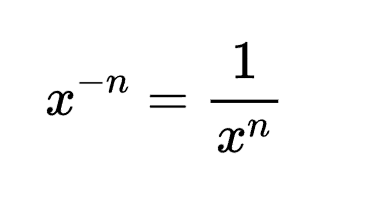
Divide-and-conquer is a good approach for a positive n. If n equals 2, I can square the result by recursively computing pow (x, n/2). For positive n I can divide and conquer. If n equals 2, I can square the result by recursively computing pow (x, n/2). If n is even, I can multiply x by two more times.”
Interviewer:
“This sounds like an excellent plan – simply write out your code, then discuss its development process.”
Candidate:
“Sure. Here’s the function definition:
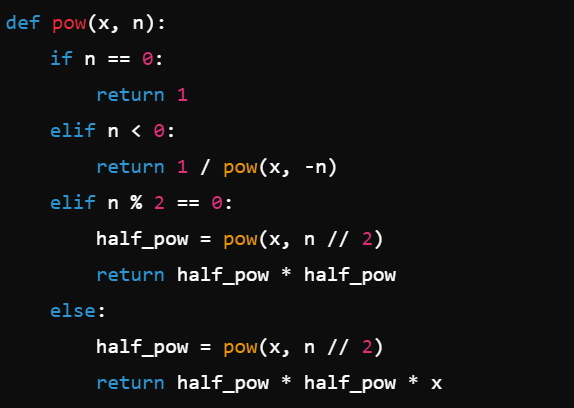
Candidate:
“I’ll walk through the example where x=2 and n=5.”

This matches our expected output.”
Interviewer:
Excellent! Now let’s evaluate your solution’s time and space complexity.”
Candidate:
This program’s time complexity is O(logn), due to our strategy of dividing every number by two before performing each recursive operation. Because the stack structure keeps growing with every iteration, space complexity also remains O(logn). “Had we implemented this iteratively instead, space complexity would only have reached O(1).”
Interviewer: “Excellent analysis.”
Candidate: “This method would have the same time complexity as dynamic programming, however we could also utilize bit shifting to optimize our algorithm using powers of two and thus be more cost-efficient.”
Interviewer: “Interesting. Let’s move onto the final portion of this interview: Any additional inquiries about Amazon or working there?”
Candidate: “Yes, I do have some questions for you about working at Amazon? What have been some of the greatest pleasures and challenges associated with working for them?”
Interviewer: Working at Amazon has been an incredible journey! I love the flexibility and ownership of our projects; as a software developer I enjoy making decisions regarding architecture and design of applications while contributing my skills in both frontend development as well as backend programming. Plus our work projects vary immensely to keep things exciting!
Candidate:
Please describe the projects and experiences from your internship placement.
Interviewer: My team creates applications to support various business functions, including vendor and seller applications. For my summer internship, I primarily worked on rebuilding an Java Spring application. “This experience was tremendously educational: I saw first-hand how large systems are designed and constructed.”
Candidate: “Thanks for sharing your insights about Amazon’s culture! Please provide an outline.”
“Amazon’s culture is highly fast-paced and dynamic, placing an emphasis on innovation and results. Leadership principles guide our daily work and interactions among us – it’s an environment which fosters support and collaboration.”
Candidate: “Thanks again – it was truly appreciated!”
Interviewer: “Thank you. It was my pleasure speaking with you. A recruiter will contact you within 2-5 business days with next steps for moving forward with this interview process. Have a fantastic day!”
Candidate:
“Thank you!”
With our assistance we were able to successfully answer these questions in an interview setting. Not only was their programming abilities evident during discussions and analysis sessions, but so was their communication abilities and ability to solve problems effectively. These insights will not only prepare us for Amazon interviews but will help improve real-world programming problems as well. Good luck on future interviews!”
For More Information