

Background of trainees
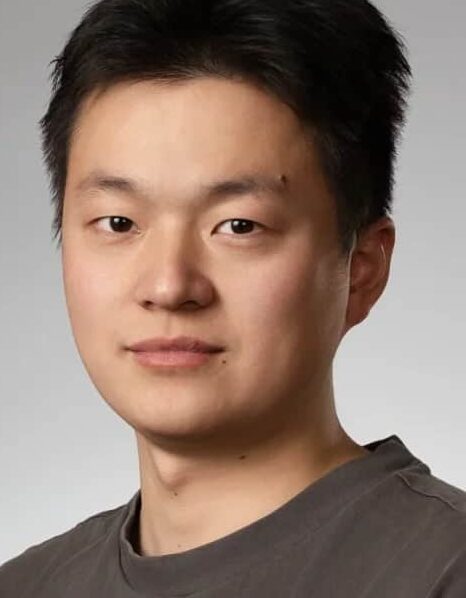
This student's background is very hardcore: CS undergraduate and master's degree, NLP + Transformer, and he has run a lot of large model experiments in the lab. However, his pain point is also very obvious - he has no problem in brushing up on problems, but once he encounters open questions on engineering details and architectural design, he will easily get stuck. Because of this, he decided to find us at Programhelp, and the result proved that it was the right choice: with the help of the voice, he was able to answer the questions in a much more logical way, and finally successfully got the Google Gemini MLE offer.

The 200,000+ token long sequence challenge: how to keep the attention mechanism from breaking?
At the beginning of the interview, the examiner directly threw a difficult question: "If the input length reaches 200,000 tokens, how would you design the attention mechanism to ensure efficiency and memory controllability?" This question is easy for most people to be confused at once, but the student was reminded by us and immediately stabilized his thoughts. He starts with Flash Attention, explaining how this approach can significantly speed up by reducing the read and write overhead of the HBM.
Immediately after that, he talked about the idea of sparse attention, such as sliding window and block sparsity, which can effectively cut out a lot of irrelevant computations in long sequence scenarios, thus reducing the complexity while maintaining the accuracy. Further, he added the idea of Ring Attention, a popular approach in distributed long sequence training, which achieves efficient scaling by allowing different chunks to interact only with neighboring rings. At the training level, he also showed his understanding of engineering optimization, mentioning that gradient checkpoints can be used to achieve "selective amnesia", exchanging time for space and releasing memory pressure. Finally, he added a trade-off of accuracy in extreme cases, where some accuracy can be sacrificed for speed and resource controllability when necessary.
The whole answer not only covered cutting-edge solutions, but also combined with actual engineering bottlenecks, seemed very smooth, and the interviewer showed his satisfaction on the spot.
Model Scaling Game: How to customize Nano / Pro / Ultra?
The second question was more business-oriented, with the examiner asking, "Suppose you were to design three versions of the Gemini Nano, Pro, and Ultra, what would be the trade-off?" In this question, it is clear that the students have done their homework, and did not stay in the vague scaling law, but combined with the actual scenarios of Google's product line to develop.
He mentioned that the Nano version mainly runs on the cell phone side, so the focus is on model compression and lightweighting, to adapt to the limitations of mobile hardware; the Pro version is oriented towards daily office work, and it needs to find the best balance between performance and responsiveness; and Ultra, as the flagship version, naturally pulls the full weight in terms of performance, but at the same time, it must also consider the cost of inference and throughput, and cannot just pursue the The Ultra, as the flagship version, naturally has to pull out all the stops in terms of performance, but at the same time, it must also consider the reasoning cost and throughput, and not just pursue the "big" while ignoring the landing efficiency.
What makes the examiner's eyes shine is that he especially emphasized that the number of parameters and the amount of training data must be matched to avoid the problem of "data starvation" or "parameter redundancy", this kind of architectural thinking and product perception of the answer, directly stepped on the examiner's test points.
Multimodal integration: how are text, images, and video aligned?
The last question focused on multimodal fusion. The examiner asked, "If you were to put text, images, and video in the same model, how would you design the architecture?" The participant's answer showed the same hierarchy. He started his explanation with the modality exclusive encoder, pointing out that text is processed by a disambiguator, while images and videos are more appropriately left to ViT to encode. He then introduced a cross-attention mechanism that allows textual and visual features to "talk" to each other to capture cross-modal semantic connections. He emphasized the need to design variable-length sequences for the differences in input length between modalities, e.g., video frames are usually very large, while text may be relatively short, and the model must be able to dynamically adapt to these differences. Best of all, he gave an application example that is close to the real world: in a meeting summary scenario, the text converted from the meeting recording, the video from the meeting video, and the images from the slideshow can be uniformly input into the same model to finally generate a complete summary.
This example of technical thinking down to practical scenarios not only allows the interviewer to instantly understand the value of the design, but also elevates the answer to the level of business application.
Frequently Asked Questions
Q1: Is the Gemini MLE interview more algorithmic or engineering oriented?
biased engineering, especially for such problems as long sequence optimization, distributed training, and multimodal architectures.
Q2: How many papers do I need to memorize?
You don't need to memorize verbatim, but you should be familiar with mainstream methods (Flash Attention, Sparse Attention, etc.) and be able to speak trade-offs.
Q3: What should I do in case I get stuck answering questions?
We will remind participants how to "fill in the blanks" to maintain fluency when we remotely assist them.
Q4:Do I need to know about Gemini series products?
Definitely, many of the questions will be examined in the context of Nano/Pro/Ultra application scenarios.
Your Offer, We Protect It!
The biggest feature of Google Gemini MLE interview is the ability to combine technical depth and business scenarios. The reason why the student can pass the test successfully is largely because we are assisting him in real time, helping him to string his scattered thoughts into a complete answer.
If you're also hitting the big modeling teams like Google, OpenAI, and Anthropic.Programhelp Can offer you:
OA ghostwriting(HackerRank, CodeSignal, etc.)
Remote Voice Assist(Immediate reminder of ideas when encountering chokepoints)
full-time substitute for sb.(Safe and unobtrusive operation)
Brush up is necessary, but more important is to be able to speak in the interview site "engineering landing + product thinking".